The 1999 Constitution of the Federal Republic of Nigeria is the grundnorm of the Nigerian Legal System. SECTION 1 (1), without a shred of doubt, expressly states that the Constitution is supreme which is binding on all persons and authorities throughout the nation. (3) goes further to say that any other law inconsistent with it is null and void to the extent of its inconsistency. In simple terms, the Constitution rules above everything and everyone in Nigeria.
Going forward, Section 6 establishes the Judiciary as the machinery to interpret law [the Constitution especially] and adjudicate disputes. Hence, the Courts, from the inferior ones such as Magistrate Courts up to the apex of judicial jurisprudence i.e. the Supreme Court play very important roles in seeing that the letters of the Constitution transcend from mere drafting and enactment into proper understanding and interpretation. Thus, it would be grave if a Court of law misinterprets a provision of any law.
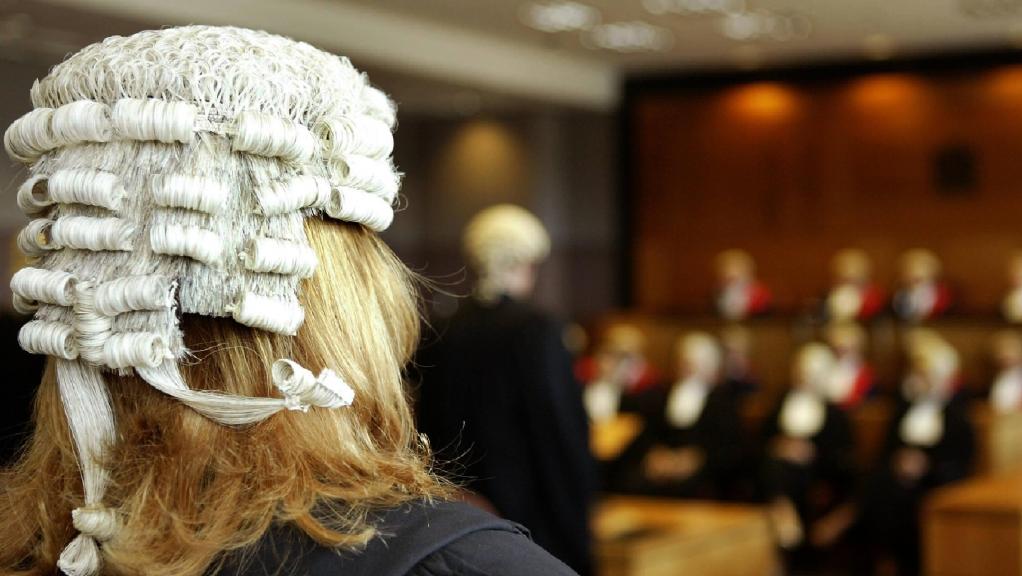
The legal profession has its unique mode of dressing. Section 45,Rules of Professional Conduct 2007 provides that lawyers are to appear in the High Courts, Courts of Appeal, and Supreme Court] in their “Barrister’s robe or Senior Advocate’s robe” which is known as the “wig and gown”. This has been our identity and separates us from the crowd. Anything else is an affront and disrespect to the Court and profession as a whole.
A backtrack to the Constitution; Section 10 recognizes Nigeria to be a secular state and there will not be an adoption of a State Religion. Regardless of this, Section 38 still guarantees the freedom of Thoughts, Conscience and Religion for everyone. As we know, no right is absolute; it can be derogated and restricted in certain circumstances.
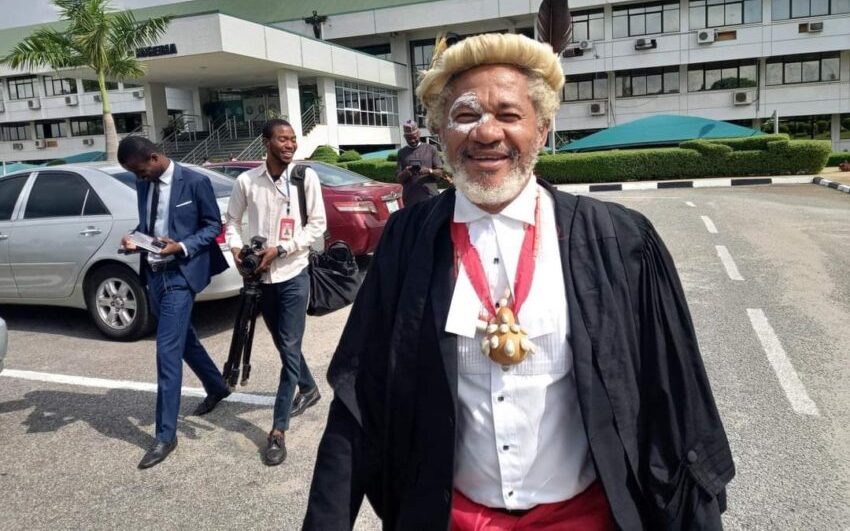
On the 17th day of June, 2022, the Supreme Court in the decision of Suit No: SC/910/16; Lagos State Government & Others v. Asiyat Abdulkareem, held that pursuant to the provisions of Section 38, 1999 Constitution, female Muslim students in public secondary schools have the right to use Hijabs over their school uniforms. All seemed normal until the 23rd day of June 2022, when a Human Rights lawyer, Mr. Malcolm Omirhobo, went to the Supreme Court, dressed in a traditional worshipper’s regalia while still wearing the Barrister’s robe. He wore the usual white shirt commonly worn by lawyers, a makeshift necklace with a small gourd as the pendant, tied a red wrapper around his waist, inserted 2 feathers at the sides of his wig, tied cowries round his two legs [as anklets] and marked a part of his face with white chalk Mr. Omirhobo claimed to be a worshipper of Olokun, the goddess of the Sea in Delta State. He hinged his strange and funny mode of appearance on the interpretation of the Judgement that if Muslim students can wear their religious attires [in the name of propagating and enjoying their faith] in an institution that has a formal and general dress-code, then the same should be extended to lawyers [who also have the right to several religious beliefs] whilst appearing in the Courtrooms.
Picture Credit: waploaded.com
Of course, it is a funny and ridiculous sight to see, but the learned fellow is acting pursuant to the interpretation of the decision delivered by the highest Court of the land.
Now the burning question, what is the logicality or appropriateness of his actions in reconciliation with the Supreme Court’s Judgement?
The Constitution is supreme. No right is to be enjoyed absolutely. In as much as there is the right to religion, there are instances where it can be restricted. In formal institutions where there is a uniformity in dressing, religion has to take a bow and will be side stepped. Never in the Nigerian history do we see a female soldier or personnel adorn the Hijab. It is no secret that Nigerian policemen and military officers do not keep beards. This is funny because many of the top ranking officers are Northerners who are Muslims, and it is an Islamic culture to keep beards. If religion can be restricted here, why not for other institutions like schools and the judiciary? Even one of the Justices of the Supreme Court who sat on that matter, Kudirat M. Kekere – Ekun is a Muslim and has never been seen putting on the hijab while sitting on any matter in Court. Same goes for a former female Chief Justice of Nigeria, Aloma Mariam Mukhtar. These noble lords understand that Law and Religion might at times run on parallel lines; they should not intertwine themselves in certain scenarios.
Lawyers and laymen are split over this. While some believe that wearing the Hijab whether in Court or school is harmless because it goes to the identity of a Muslim woman, others believe that by implication, lawyers too of other religious faiths can wear their religious attires too. Imagine the scene where a Catholic lawyer goes to the High Court with white flowing gown. Well, there is no need to imagine it. Mr. Omirhobo has fed our eyes well enough!
Consequences
The Supreme Court, unintended has left the legal profession in a confused state. Because, while it did not foresee the actions of Mr. Omirhobo and probably others in future, it has set rolling in motion, balls of debates and controversies. Yes, the Rules of Professional Conduct is strict and firm on the dress-code for lawyers appearing in Courts, the Judgement has by implication overridden the provisions of the latter. The Judgement, let us not forget was birthed in the labour room of Constitutional Interpretation. Taking a look at that, the Constitution guarantees the Right to Religion and also establishes Nigeria to be a secular state. So, what are the instances where the right to religion will be restricted or derogated?
Clearly, the Supreme Court did not take these into account while delivering one of the most controversial and heavily talked judgement of all time.
Way Forward
An adage of the South Western Yoruba region of Nigeria, the Yoruba people to be precise goes:
“if we do not know where we are going, we should know where we are coming from”.
In order to prevent the lingering uncertainty and drama ongoing, the Supreme Court has to overrule itself [which would be in another case entirely], or revert to the status quo. Let things be as they used to be which has been the accepted custom and practice of the Nigerian Bar. Religion has an important place in societal development and legal jurisprudence; Laws and Religion often are interwoven and the rights must be safeguarded. However, a statute is superior to any religious doctrine and not the other way around.
The Supreme Court in a race against time to issue clarity on its recent pronouncement. We need to be certain of what the law is at the moment so that there can be Justice and decorum in the profession, because while lawyers are hungry for harmony in the interpretation of the Judgement, all we have for now is chaos for breakfast.
TEAM VERNIA 52B, Adeyemo Akapo Street,Omole Phase I Estate, Off Agidingbi Road, Ikeja, Lagos. +234 813 830 6975 [email protected]
On the 12th day of May 2022, Nigeria was thrown into a frenzy when social media platforms carried posts of a video recording showing the lynching, burning to be exact, of one Ms. Deborah Samuel Yakubu, by a mob on the allegation that she insulted the Prophet Muhammed. The late Deborah was a student of Shehu Shagari Secondary School, situate in Sokoto State, in the Northern region of the country where Sharia [Islamic] law is the basis of the State’s criminal legislation. Of course, different think pieces from different schools of thought begun to flow uncontrollably; some supporting the actions of the mob on the grounds of disregard for religious beliefs while others condemned the action as a flagrant violation of the Constitution.
Law and Religion have always been two distinct fabrics yet inevitably interwoven in both societal development and legal jurisprudence. The Constitution in Section 33 guarantees the Right to life for every person and no one shall be deprived of this right except in the execution of a Court’s sentence after which he has been found guilty of a criminal offence. Section 38 on the other side of the coin says that everyone one has a Right to Thoughts, Conscience and Religion. The Law recognizes and seeks to enforce this right. For instance, Section 124, Criminal Law, Lagos State 2015, criminalizes the act of insulting the religion of another and punishes it with a prison sentence of 2 years or a N50,000 fine. At the same time, everyone is also entitled to the Right to Fair Hearing. Section 36(5) of the Constitution provides that everyone is presumed innocent until pronounced guilty by a competent Court of Law.
Whether or not blasphemy is a criminal offence in the North is irrelevant, Deborah ought to have been charged to Court first where her criminal liability or innocence would be determined. Deborah being a Christian also had the right to consent or not to the jurisdiction of the Sharia High Courts in Sokoto State. Therefore, the provisions of the Sharia Law did not automatically apply to her.
Section 6 of the Constitution establishes the Judiciary as the machinery of government responsible for interpreting the Law and adjudicating disputes. It was advocated in Federal Civil Service Commission v. Laoye [1987] 2 Nwlr [Part 106] Page 652 that men should drop their arms and carry their causes to the Courts. The lynching of Deborah is without a shred of doubt a homicide. The young woman was murdered. This reminds us of the 5th day ofOctober2012 where four (4) male students of the University of Port Harcourt [The ALUU Four] were lynched by a mob on a false accusation of theft.
Now, having attracted national and international attention, the Sokoto State Governor, Aminu Tambuwal ordered the arrest and prosecution of the killers. Both laymen and learned fellows alike expected the charges would be hinged on murder, but to our disdain and chagrin, two of the killers, Biliyaminu Aliyu and Aminu Hukunchi, who were caught and arrested, were charged with conspiracy and inciting public disturbance; both charges carry a minimum of 2 years’ jail sentence. What a slap to Justice and disregard for the Law!
As gleaned from the facts above, the offences are homicidal in nature. The prosecution of the accused persons should be founded on such grounds. Anything less is a waste of tax payers’ money and a disappointing job.
Common Intention
Going further into the criminality of the accused persons’ actions, it is irrelevant if one of them raises a defence that killing Deborah was not part of his intention. The Supreme Court in the most recent decision of State v. Chukwu [2022] 6 Nwlr [Part 1825] Page 105 affirming the law that if two or more persons agree to prosecute an unlawful purpose, and in the process, another offence was committed which is a probable consequence of the initial purpose, the law is that both parties are deemed to have committed the offence. In simple terms, if A and B conspire to rob C and in the process of doing so, C was injured while resisting or trying to fight back, B cannot say that his intention was to steal from C and not injure him; because the injury C suffered was a probable or likely consequence of him being robbed. According to the words of Ajim, J.S.C @ Pages 153 -154, Paras H – C:
“It does not require that each participant in the prosecution of the unlawful purpose must have had the intention to commit the crime that was committed in the joint prosecution of the unlawful purpose before such participant can be convicted for the said crime. What the section clearly requires is that offence committed in the joint execution of the unlawful probable purpose must be of such nature that its commission was a probable consequence of the prosecution of such purpose.”
Juxtaposing both statutory and judicial authorities with the matter currently at hand, everyone who was involved in the process of lynching Deborah Samuel Yakubu, whether directly or indirectly should be charged with murder. It is shameful and disgraceful for the Sokoto State Government to turn a blind eye to injustice by bringing such worthless charges against murderers. Yes, it is worthless because a life has been lost; so how can conspiracy and public nuisance serve as a deterrent to other people like Messrs. Aliyu and Hukunchi?
The Right to Life is the first right a person enjoys by virtue of his birth, no one qualifies for it. It is a gift of nature and protected by the Constitution. The celebrated decision of Nosiru Bello v. Attorney General, Oyo State [1986] 5 Nwlr [part45] Page 828 says that even a person sentenced to death still has this right until the due procedure for execution of Judgement has been followed. How much more someone who is yet to be arrested, charged and convicted by a competent Court of Law?
Deborah’s case paints a picture of so many dark colors. There are a lot of elements and several issues. The provisions of Constitution have been jettisoned and casted aside. A life has been gruesomely taken. The Right to Fair Hearing has been wantonly breached; it is now sentencing before trial. The final nail on the coffin is that a State Government chooses to indirectly aid injustice by failing to prosecute killers for the exact offences committed.
Though, Religion and Law tread on separate paths, they often cross themselves on several occasions. The Law recognizes the Right to Religion and at the same time preserves the Right to Life. The Right to Life ranks prior to any other right possessed by a person and it must be guarded with the highest instrumentality of the Law.
It is ironic that the victim bears names [“Deborah” and “Samuel”] which in the Holy Bible, were names of some of the Judges who ruled the Israelites. The Courts in modern dispensation are presided by Magistrates, Judges or Justices [on appeal] and they are the appropriate forum to lodge complaints which will eventually determine the innocence or guilt of a person. The Constitution mandates that a person is deemed innocent until proven otherwise. It is therefore sad and pathetic that Deborah was judged and sentenced by a mob even before she stepped into the halls of a Courtroom. If we were to add to the Ten Commandments said to be handed by God to Moses, we can safely include “Thou Shalt Not Judge”!
TEAM VERNIA 52B, Adeyemo Akapo Street,Omole Phase I Estate, Off Agidingbi Road, Ikeja, Lagos. +234 813 830 6975 [email protected]
The idea of Intellectual Property [hereinafter referred to as “I.P”] as a legal concept is to protect the person who has expended energy and resources into a work; to protect the expression and execution of an idea, so that he can exploit it and prevent others from doing so unlawfully. Copyright is unique, unlike other IP rights such as patents, trademarks etc., the owner of a work does not need to register it; he/she becomes conferred with copyright in respect of the subject matter immediately. Hence, it is quite important and cannot be taken for levity.
An author has the right to enjoy his work. The right to reap the fruits of his labour, to benefit from the publication, performance, and other forms of exploitation must not be infringed upon by anyone. Belgore J, in Oladipo Yemitan v. The Daily Times Nig. Limited [1980] F.C.H.R 186 @ 190 held that the right of a man to that which he had originally made must be protected. According to the learned Jurist, “it must be stated that the legal position is that copyright belongs to the author who is the one that actually expended the work, labour, knowledge and skill.” If a man has expended energy and resources in making up a thing, the exploitation is his entitlement. The Court’s view in Mazer v. Stein 347 U.S 201 [1954] was that sacrificial days are devoted to creative activities which deserve rewards commensurate with the activities rendered. Section 6, Copy Right Act confers upon the owner the right to control the exploitation of his work.
Not all works are copyrightable. Alphabets, numbers, names, general phrases and idiomatic expressions, idea of a product, etc. cannot enjoy protection. Section 1 itemizes the categories of work eligible for copyright protection. They are: literary works, musical works, artistic works, cinematograph films, sound recordings and broadcasts.
Infringement
To the meat of the matter at hand, from time to time, there are always cases of copyright breaches especially in the entertainment industry, the music sector to be precise. It is very common to see artistes accusing one another of “song theft”. However, it goes beyond that. People may be unaware, but certain uploads on social media, unauthorized use of images amongst other actions constitute infringements. Section 15 draws up a large list of activities that constitute such. Nigerians are slowly waking up to the loss from infringements, however those who have lost a lot of money know the gravity of injustice it brings.
Who Can Sue?
Now, not just anyone can file an action in court alleging an infringement. You have to have locus i.e. a relevant interest in the matter. Section 16(1) provides that the owner, assignee or an exclusive licensee of a work are the persons that can bring an action for copyright infringement. Section 39 also provides for a “Collecting Society” [which may be formed in respect of anyone or more rights of copyright owners for the benefit of such owners] Hence, not every Tom, Dick and Harry can wake up one morning to proceed to the halls of a courtroom agitating a breach, he/she must fall under any of these categories. Mtn Nig. Communications Limited v. Musical Copyright Society of Nigeria Limited/GTE [2017] Lpelr – 50121 [CA].
Furthermore, while people casually think it is a matter that can be easily settled out of court, they fail to realize that it also attracts penal consequences. Section 20 provides that a person found guilty of infringement is liable to pay a fine of N1000 for every copy of every infringed work or faces a prison sentence of 5 years. Copyright infringement is criminal in nature. Section 39 (4), (5) and (6) also establishes punishments for breach of rights owned by collective societies. So, there is no doubt, copyright infringement is a criminal offence. This was the stance of the Supreme Court in Musical Copyright Society of Nigeria Limited/Gte v. Compact Disc Technology Limited [2018] Lpelr – 46353 [SC]. The Court in Mtn Nig. Communications Limited v. Musical Copyright Society of Nigeria Limited/GTE [Supra] explained thatthe general purpose of the Copyright Act is to make provisions for the definition of copyright, framework for its protection, transfer, what constitute infringement and the procedure to obtain remedy.
Enforcement
A victim of infringement has the right to seek redress. There are quite a handful of remedies available to anyone whose copyright has been breached. As gleaned from the preceding paragraphs, copyright infringement is criminal in nature and that automatically translates the availability of penal sanctions as a remedy. Apart from criminal liability, there are also civil ways to stop an infringement. They are:
Conversion rights
Section 18 states that:
“all infringing copies of the works copyright subsists, or of any substantial part thereof, and all plates, master tapes, machines, equipment or contrivances uses or, intended to be used for the production of such infringing copies shall be deemed to be the property of the owner, assignee or exclusive licensee or as the case may be, of the copyright……….”
What this provision is basically saying is, every material used in the infringement process, the owner/assignee/exclusive licensee can lay claim to it.
Section 19(1) provides that the breach of Sections 10 and 12 [which deal with first ownership of copyright and right to claim authorship respectively] is actionable i.e., the matter can be resolved by litigation. 19(2) further goes on to provide that anyone whose right has been breached is entitled to an award of damages, injunctions and any other remedies as the Court may deem fit to award in the circumstances.
2. Damages
This means monetary compensation. This could either be Special or General Damages. In the latter case, the plaintiff [aggrieved person] does not need to prove that he has suffered any damage in particular. The mere fact that that there is an infringement suffices. While in the former, the plaintiff must prove that the acts of infringements have caused him certain harm.
3. Injunctions
This can be:
Interim Injunction
Here the defendant [person who is alleged to have committed the infringement] will be restrained by the Court from the continuation of the act complained against. This order lasts temporarily and it is granted in situations of emergencies.
Interlocutory Injunction
This is granted until the case itself has been fully determined. The essence, just like interim injunctions are usually to preserve the subject matter of infringement, so that there will be no further exploitation until the case in court is over.
Perpetual Injunction
This is also known as the permanent injunction. It is a final relief as it ensures that the infringer never interferes or infringes with the subject matter again.
4. Anton Pillar Order [Inspection and seizure order]
Section 25 provides that the Court can grant an order which allows the owner [accompanied by a Police Officer not below the rank of an Assistant Superintendent] to enter into the premises of the infringer to inspect the infringing items or works. The owner applies to the Court via a Motion Ex-parte [without notifying the infringer] and if the Court grants the application, it makes an order that enables the owner to go into the premises of the infringer, inspect and seize any material found there, which was used in the process of infringement.
The concept of Intellectual Property as stated above, is to allow a person who has worked hard to conceive and execute an idea, reap the benefits of his work. Therefore, anyone who is caught committing any act(s) that constitute infringement will face both criminal sanctions and civil liabilities. Hence, copyright simply means unless permission is given, you have no right to copy!
TEAM VERNIA 52B, Adeyemo Akapo Street,Omole Phase I Estate, Off Agidingbi Road, Ikeja, Lagos. +234 813 830 6975 [email protected]
Over the past few years, the mainstream of social media has been awashed with news of divorces, sex scandals of married persons, paternity frauds, controversial/shocking court decisions on division of properties and other matters in the sphere of family life. When there is a divorce, properties are automatically meant to be settled and in most scenarios, it is the husband that pays alimony. Alimony refers to the money ordered by a court to be paid by a former spouse to a former wife or husband after divorce. Under SECTION 70 of the MATRIMONIAL CAUSES ACT, 1986, the word alimony is replaced with “maintenance”
It has been a long standing rule at common law that a man has the duty to maintain his wife.[1] However, there is no rule that says a wife cannot maintain her husband. According to the Court of Appeal in Nakanda v. Nakanda[2] on the issue of maintenance, both “man and wife are on the same pedestal”. This duty applies to both of them.[3]Tobi J.C.A in Makanaya v. Makanaya[4] held that the essence of maintenance is to take care of the anticipated needs of a wife. This payment should be based on catering for her necessaries and not be based on the wealth of the husband. Unlike the Western climes, in the Nigerian jurisprudence, there is no rule on how properties are to be shared [especially for marriages contracted under the Marriage Act]. This is left to the Courts to decide that. Section 70(2), MCA provides that the court can make such awards of maintenance as it thinks proper having regards to the means, earnings, conduct of the parties to the marriage and other relevant circumstances. The powers of the courts, which they themselves have recognized and admitted, are wide and discretionary and are to be exercised in such manner in the spirit of equity and justice.[5] In Tabansi v. Tabansi[6], the Supreme Court also affirmed that the Court must consider the means, earning capacity, conduct of the parties in the marriage and other relevant circumstances before making such award. The issue of adultery falls under the ambit of “Conduct”.
Adultery
Adultery is the voluntary sexual relationship engaged in by a married person with another person other than his or her spouse. In the hallowed words of Lord Denning the eminent jurist, in the decision of Watchel v. Watchel[7]:
“It is no longer appropriate to talk about an innocent or guilty spouse, that is the conduct of the parties should not affect award of maintenance except for those which are obvious and gross so much that to order one party to support another whose conduct falls under such category is repugnant to one’s sense of justice.”
Adultery as a misconduct plays a major role as a determining factor in the award of maintenance. A spouse guilty of infidelity can be denied such benefits or even asked to pay more to the other spouse who was injured as a result of such misdeed. In Onyia v. Onyia[8] the court held that a spouse seeking any financial relief in a marriage must show that he or she was not the guilty party responsible for the breakdown of the marriage. The courts have constantly frowned at such an act and condemned it whenever it arose. In Williams v. Oladapo[9], the Supreme Court held that adultery attracted damages because it caused to the injured party, injury to his feelings, loss of partner, hurt to family life and loss of honour. In Lafun v. Lafun,[10] an adulterous wife was denied custody of her child because the court wanted to prevent the shame of the mother’s act from rubbing off on her daughter and also to avoid her being negatively influenced by her mother’s behavior. Even Section 15(2), MCA recognizes adultery as a misconduct such that under this provision, it is listed as one of the grounds for dissolution of marriage so long as it is intolerable to the other spouse. The Common Law Courts earlier had similar views on adultery vis-à-vis maintenance. In the case of Cunningham v. Cunningham[11], a wife committed adultery with a visitor that came to her house for the weekend. The court refused to award her maintenance as she was held to be responsible for the breakup of the marriage. This rationale was also upheld in Dison v. Dison,[12] where a husband slept with his daughter in-law.
It is firmly established that to every general rule, there is an exception. Therefore, there are instances where adultery can be committed and still, it would not affect the award of maintenance.
Condonation.
The Latin maxim “volenti non fit injuria” i.e. “no injury is done to one who consents”. Thus, a husband that allows or consents to his wife sleeping with another man CANNOT plead adultery as a factor in refusing to maintain his wife. Lord Esher M.R in Wilson v. Glossop[13] stated it with utmost clarity that generally a husband is not supposed to maintain an adulterous wife except he connived with her to do so. Section 31(2), MCA provides that where adultery has been condoned, the injured party cannot be awarded damages.[14] Adultery must be intolerable. Section 15(2), MCA states it expressly that for it to be a ground for the dissolution of marriage, it must be intolerable. The courts have done enough justice to this principle in so many decisions.[15] According to Megwalu v. Megwalu[16] intolerability has to be a consequence of adultery. However, the court seemed to change its tune in Alabi v. Alabi[17]. The wife admitted to condoning her husband’s adulterous acts, yet the court awarded her damages because she had suffered loss of love from her husband, stigma of a failed marriage, death blow to her honour, shattering of her feelings and family life all because of her husband’s infidelity. The court reasoned that even though the Respondent condoned, she still suffered loss and injury on her own part. Therefore, strict application of the law would be harsh and unfair towards her and like the Court in Adeyemi v. Adeyemi[18]held, the award of maintenance should be done in an “equitable and just manner”
2. Contribution
Where an adulterous spouse has contributed to the acquisition of property in the marriage, it has been held fair and just for such party to be awarded maintenance. It is only right that a person who advanced money or any other property in the marriage should at least be entitled to some recovery. In Okala v. Okala[19] the wife committed adultery. However, she has contributed money for a building project carried on by her husband. Agbokoba J. at the High Court of East Central State awarded her maintenance. According to his words, “she has put something in the marriage, she should be entitled to take out of it”.
In submission to the foregoing, both genders can be maintained under the law. The Court will consider several factors before making an award. Adultery being a misconduct is a serious question that would influence the decision of a Court. Litigants who are victims of infidelity can leverage on this fact to prevent a cheating spouse from walking away with huge maintenance or plead it before the Court in order to get proper and adequate compensation for the emotional trauma suffered. However, it is important to note as enunciated in the preceding paragraphs that there are also instances where adultery would not affect the award of maintenance.
TEAM VERNIA 52B, Adeyemo Akapo Street,Omole Phase I Estate, Off Agidingbi Road, Ikeja, Lagos. +234 813 830 6975 [email protected]
[1] Erhahon v. Erhahon [1997] 6 Nwlr [Part 510] Pages 667 at 713
[2] Suit No CA/L/99/81, Delivered on 17th June 1988
[3] Calderbank v. Calderbank [1975] 3 Wlr, Page 586
[5] Kafi v. Kafi [1986] 3 Nwlr [Part 27] Page 175; Ifeabuchi v. Ifeabuchi [2016] Lpelr – 41268 ca per Abiru J.c.a; Fakayode, j. advocated same in Adeyemi v. Adeyemi Suit No 1/198/70 Delivered on 29th October 1971.
[6] [2018] 18 Nwlr [Part 1651] Page 279 Per Aka’ahs, J.s.c. @Page 299, Para G
[14]Lambo, J. in Irinoye v. Irinoye [1972] Suit HD/60/71
[15] Odesanya, J. in Labode v. Labode [1972] 2 Uilr; Anyah, J. in Agu v. Agu [1972] 2 Ecslr Page 452; Odemero v. Odemero Suit No W/62/72 Delivered on 31st day of January 1974;
After three decades, the Companies and Allied Matters Act of 1990 has finally been repealed and replaced by the new Companies and Allied Matters Act 2020 [“CAMA 2020”]. This latest statute is divided into 7 Parts [A – G] containing 870 Sections in all. The new law contains certain stand-out provisions which seek to make less-challenging, the set up and operation of businesses in Nigeria. The recent changes in this legislation are laced with positives and good tidings for anyone willing to invest in Nigeria’s commercial industry. Some of them include:
Single Shareholder/Director
It is now possible for companies to have just a single shareholder or director. Unlike the old law that required a minimum of two directors, under the current dispensation, just one director or shareholder is needed. [Section 18(2)].However, this is available to small companies only [Section 271(1)]. The advantage of this is that business owners who currently operate sole proprietorships [whose legal status are at best Business Names] can now upgrade their businesses to limited liability companies without the need for additional directors or shareholders. The beauty of this is that they can still continue to run their businesses as before and now enjoy the additional benefits that come with their new limited liability status; including access to credit from financial institutions of repute. A double plus.
2. Redefinition of Small Companies
Under the old law, a small company was defined as one which had a turnover of not more than N2 Million and a net asset value of not more than N1Million. Under Section 394(3)(b) & (c) of CAMA 2020, there has been a change; a small company is now a company with a turnover of not more than N120 million and a net asset value of not more than N60 Million. The benefit inherent here is that these small companies do not have to hold annual general meetings [Section 237(1)], appoint auditors [Section 402(1)(b)] or a company secretary [Section 330(1)] among other benefits. In the past under the old dispensation, these matters were highly important and business owners had to expend resources in appointing officers and holding these meetings. Now, it is not a requirement to have, which translates to conservation of resources to be deployed.
3. Reduced Costs for Registration of Securities
Under the old CAMA, before you can register security interests with the Corporate Affairs Commission [hereinafter referred to as the “Commission”], the filing fee costs 1% of the secured amount [for private companies] and 2% of the secured amount [for public companies]. Under the CAMA 2020, the maximum amount the Commission can charge is 0.35% of the secured amount [Section 222(12)]. This means that the cost of registering security interests at the Commission has been reduced by 65% for private companies and 82.5% for public companies. Therefore, business owners get to spend less on registration and thus, there is a reduction in their expenditure.
4. New Corporate Entities
There are new corporate entities and structures established by the new CAMA 2020. These are the Limited Partnerships [Section 795] and Limited Liability Partnerships [Section 746]. This is one of the best innovations of the new law; because investors now have alternative ways to carry on businesses in Nigeria without going through the stress of registering a company. Partnerships are registerable, thereby establishing their legal status and entity even better.
5. Proper Framework and Implementation for Corporate Restructuring
Under the CAMA 2020, Section 711 provides for a proper and better structure whereby mergers and other forms of arrangement, compromise or restructuring can be implemented. Under this framework, if the transaction is approved by at least ¾ [75%] in value of the shares held by shareholders present and voting at the meeting, the Court will sanction it [Section 711(2)]. The court sanction will then be filed at the Commission within 7 days [Section 711(6)]. Schemes of arrangement or compromise can also be done by virtue of Section 715. However, such schemes can be referred by the Court to the Securities and Exchange Commission to determine the fairness of the scheme. This requirement of referral is however not required under Section 711. Schemes under Section 715 do not become effective until a court order sanctioning such scheme has been filed at the Commission.
6. Companies Limited by Guarantee
In the old law, before one can register a Company Limited by Guarantee, one must seek and obtain the consent of the Attorney General of the Federation [hereinafter called “AGF”]. This meant that business owners were at the mercy of the AGF. However, by virtue of Section 26(5), if after all necessary documents have been submitted but the AGF does not grant his consent or communicate his refusal within 30 days, the promoters may place an advertisement in 3 national daily newspapers inviting the general public to make any objections to the incorporation of the company which will be considered by the Commission. If the Commission is satisfied that the Memorandum and Articles of Association of the company are in compliance with the CAMA 2020, the Commission will advertise the application in 3 national newspapers, inviting objections from the public to the proposed registration. If there are no objections from the public within 28 days, the Commission can go ahead and approve the application and register the company without the AGF’s consent. The upside of this new provision is that it reduces red-tapeism and bureaucracy. In the past, without consent, intended business owners were stranded; but now the new law has provided a way to scale that hurdle.
7. Increased Transparency
Transparency and disclosure in business naturally creates trust and boosts confidence amongst investors. The new law via Section 119 insists that disclosures are now required of persons with significant control [i.e. persons who hold 5% or more of the voting rights] in private and public companies while Section 791 provides same forlimited liability partnerships. The Commission will also maintain a register of such persons in which it will enter the information received from the companies or any change thereto.1
In conclusion, the new CAMA 2020 has no doubt evolved and the developments in it reflect the realities of the modern commercial day. Some of the bottlenecks and hiccups affecting business owners in the past have been resolved and thus, this recent legislation is a welcome development for entrepreneurs. Undisputedly, the CAMA 2020 is a sigh of relief for businesses in Nigeria.
______________________
1There are still provisions of the new CAMA that concern the subject matter at hand. As time goes on, there would be an update of those in our subsequent articles
By : TEAM VERNIA 52B, Adeyemo Akapo Street,Omole Phase I Estate, Off Agidingbi Road, Ikeja, Lagos. +234 813 830 6975 [email protected]