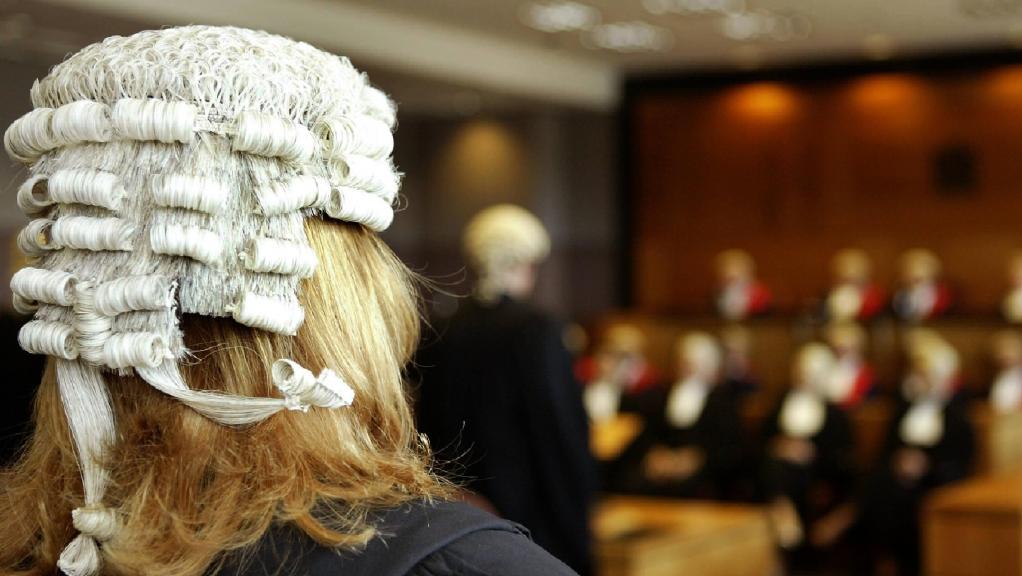
Tax Appeal Tribunal [hereinafter referred to as the “TAT” or “Tribunal”] is established pursuant to SECTION 59 (1), FEDERAL INLAND REVENUE SERVICE [ESTABLISHMENT] ACT, 2007 [hereinafter referred to as the “FIRS Act”]. The TAT replaces the former Body of Appeal Commissioners [BAC] and Value Added Tax [VAT] Tribunals. The TAT is not a Court, but rather an administrative body saddled with responsibilities of handling disputes on taxation; to be specific, taxes accruable to the Federal Government of Nigeria.
Jurisdiction
The 5th Schedule of the FIRS Act states that the TAT has jurisdiction over all matters contained in the 5th Schedule [to the FIRS Act]. These includes: disputes arising from the Companies Income Tax Act [CITA], Petroleum Profit Tax Act [PPTA], Personal Income Tax Act [PITA], Capital Gains Tax Act [CGT], Stamp Duties Act [SDT], Value Added Tax Act [VAT], Taxes and Levies [Approved list for collection] Act as well as other laws, Regulations, Proclamations, Government notices or Rules related to these Acts. Furthermore, it is instructive to note that the Tribunal also adjudicates tax disputes arising from the actions and decisions of state tax authorities provided the disputes relate to any of the Acts listed in the First Schedule to the FIRS Act. There used to be a debate as to which is the appropriate forum to bring federal taxation matters to, whether it is the TAT or the Federal High Court [hereinafter referred to as “FHC”]. Section 251(a) – (c), 1999 Constitution confers upon the FHC exclusive jurisdiction to entertain and adjudicate upon matters related to taxation of the Federal Government or its agencies. Section 59 (2), Establishment Act saddles the TAT with the responsibility of handling disputes relating to taxes due to the Federal Government through the FIRS. Therefore, it begged the question that when there is a grievance, which of the two judicial bodies is the appropriate point of call? Can a complainant bypass the TAT and go straight to the FHC or he must go through the former first? After series of decisions, the Court of Appeal finally put an end to this. In Federal Inland Revenue Service v. TSKJ [Construcoes Internacional Sociadade Unipersoal], [2017] LCN/10279 CA, the Court held that a party must approach the TAT before escalating a grievance to the Federal High Court where a statute prescribes a line of action in resolution of a dispute, all available remedies must be exhausted first before resorting to the halls of a Courtroom. This however, as properly and firmly noted by the same Court of Appeal in the later decision of Skye Bank Plc v. K.S.I.R.S [2021] 12 Nwlr [Part 1789] Page 27], the TAT is not a Court and does not ousts the jurisdiction of a Court.
The TAT Zones
A Tax Appeal Tribunal is located in the Federal Capital Territory, Lagos State and in each of the six geo-political zones of Nigeria.
Initiation of Action
The Tax Appeal Tribunal as defined by the Court of Appeal in Skye Bank Plc v. K.S.I.R.S [supra] is an administrative tribunal set up to determine the correctness of assessment of tax without fixation of formality. When a tax has been imposed on a party, he is free to object to it and lay a complaint to the imposing authority. Upon failure to reach an amicable resolution, such complainant [aggrieved party] has the right to escalate it further by approaching the TAT. The procedures of filing an action under the TAT, like a usual Court, is regulated by procedure and hence the Tax Appeal Tribunal [Procedure] Rules 2021.
According to the FIRS Act and Order 3 Rule 1, TAT [Procedure] Rules 2021, both the taxpayer and relevant tax authority can initiate the appeal process. Rule 2 provides that such complainant shall file the action within a period of 30 days from the date on which the cause of complaint [action, decision, assessment or demand notice] which is being appealed against, was made by the FIRS. However, the Tribunal may still entertain an appeal after the expiration of the said period of 30 days if it is satisfied that there was a reasonable cause for the delay. Going further, Rule 3 says that if the complainant is the FIRS or any relevant tax authority, aggrieved by non-compliance by any person in respect of any provisions of the tax laws referred to in Paragraph 11 of the 5thSchedule to the Act under its administration, it may as in Rule 2 above, file an appeal at the appropriate zone of the Tribunal.
If a party is still dissatisfied with the decision of the Tribunal, Order 1, Rule 1, Federal High Court [Tax Appeal] Rules, 2022 provides that such party can file a Notice of Appeal to the Federal High Court within 30 days after the decision of the Tribunal was given.
Structure
According to Section 2,5th Schedule, Establishment Act, the TAT has a total of 50 Tax Appeal Commissioners. A Tribunal consists of 5 members appointed by the Honorable Minister of Finance. The Chairman for each zone must be a legal practitioner who has been so qualified to practice for a period of not less than 15 years with experience in tax legislation and tax matters. The Chairman presides at every sitting of the Tribunal and in his absence the members shall appoint one of them to be the Chairman. The quorum at any sitting of the Tribunal is 3 members. Section 4 provides that a Tax Appeal Commissioner is to hold office for a term of 3 years, which is renewable for another term of three years only, from the date on which he assumes his office or until he attains the age of 70 years whichever is earlier.
Responsibilities of The TAT
The Tribunal is responsible for entertaining, determining and adjudicating on all the cases filed before it. The Tax Appeal Commissioners sit on the tribunals to perform these duties. Also, where the cases also have elements of crime, it can refer them to the office of the Attorney General of the States or Federation [as the case may be]; or other law enforcement agencies so the matters can be prosecuted. The decision of the Tribunal [Award or Judgement] will be registered at the Federal High Court and enforced as if it was a Judgment of the Court.
Bottlenecks of Dispute Resolution
As gleaned earlier, appeals from the TAT lie to the Federal High Court. Order 1, Rule 1 Federal High Court Tax Appeal [Procedural] Rules, 2022 is instructive on this. However, this can only be done on points of law. The Act provides that appeal against the decision of the Tribunal lies to the Federal High Court “on points of law” and further appeal lies to the Court of Appeal. No room for an appeal on points of facts is made here. This may appear unconstitutional and could be challenged. However, it would also seem that the approach as universal appeal in matters of tax appeal. In addition, the Rules require a deposit of Judgement Sum. Order 5 Rule 1 mandates a tax debtor who is challenging the decision of the Tribunal [“the Tribunal”] to deposit the judgement debt in an interest yielding amount maintained by the Chief Registrar of the Court. Otherwise, the appeal will not be heard. This is a precondition that must be satisfied. In our opinion, it seems unfair to a party being asked to deposit the same amount of money which he is appealing against, before he can make that appeal. It is nothing but a representation of the popular phrase associated with the military which is “obey before complain”. The essence of appealing is to overrule the lower court and prevent that “obedience” from taking place. However, on the flip side, it is argued that this payment to the Government is imperative for the funding of developmental projects. Failure of parties to pay hinders the tasks the Government intends to carry out. Besides, Paragraph 17, 5th Schedule of the FIRS Act mandates this payment to be made as a condition precedent to further appeal. It should be noted that this approach is not unique to Nigeria. It could be found in other tax jurisdictions to a varying degree.
Furthermore, at the TAT, the commissioners who adjudicate the disputes are experts who have experience in taxation. However, the Judges at the Federal High Court where appeals from the TAT will lie to, might not be vast in the realm of taxation and this undoubtedly can scupper the Court from reaching a sound and robust decision. There have been calls for the establishment of a proper Revenue Court manned by Judges appointed from legal practitioners with verse knowledge of and wealth of experience in tax matters and tax dispute resolution.
Conclusion
The TAT has always been a proper forum to ventilate taxation related grievances. Parties do not need to go to Court and endure all the stressful procedure required just before they can seek redress. The Tribunal saves them that long and tedious process. The aim, like any other body tasked with judicial and adjudicatory powers is to determine rights and liabilities and ultimately grant redress being sought by parties who come before it.
However, the system is not perfect as it is fraught with its own shortcomings. The restriction on appeals only on points of law is a not in the interests of litigants as the very Justice they seek before the Federal High Court is already limited. We strongly opine that a balance be struck in the payment of the Judgement Sum as a pre-condition for appeal, which would reflect equity and fairness. Yes, it looks harsh on parties but also, the Government needs the money too. The Law needs an amendment. Then, to ensure well-grounded decisions, forged from solid jurisprudence are reached, devoid of all the stressful procedure and legalese of the regular Courts, we suggest that there should be the establishment of Revenue Courts in line with the prescription of the revised National Tax Policy Document. In fact, the TATs can be transformed into these proposed Revenue Courts while the Chairmen be elevated to the position of Judges.
TEAM VERNIA 52B, Adeyemo Akapo Street,Omole Phase I Estate, Off Agidingbi Road, Ikeja, Lagos. +234 813 830 6975 [email protected]
The recent Money Laundering Act [hereinafter referred to as “MLA”] was enacted in May 2022 to repeal the previous Act of 2011. This latest law like its predecessor is to ensure transparency and disclosure by shining the torchlight on financial transactions, combat money laundering and other related crimes. Penalties as usual, have been prescribed to act as deterrent for anyone, whether natural or corporate, who flouts these provisions.
The Law
Section 2(1) provides that no person or body corporate shall except through a financial institution, make or accept a cash transaction exceeding the sum of N5 Million Naira or its equivalent [in the case of an individual] or N10 Million Naira [in the case of a body corporate].
Section 3(1) imposes a duty to report in writing, a transfer to or from a foreign nation, funds or securities by any person including a money service business, of any sum exceeding $10,000, to the Special Control Unit against Money Laundering [hereinafter referred to as “SCUML”], a unit under the Economic and Financial Crimes Commission, Central Bank of Nigeria and Securities and Exchange Commission, within one day from the date of the transaction.
Section 4 (1) – (12) creates a responsibility on financial institutions and designated non-financial business and profession [hereinafter referred to as “DNBP”] to identify the identities of customers, take reasonable measures to verify anyone acting on their behalf, carry out due diligence while establishing business relationships and transactions, scrutinize transactions, gather sufficient information about customer and their business, etc.
Section 6 (1)says that financial institutions and DNBPs whose profession involves cash transactions shall in the case of a new business, before its commencement and an existing business, within 3 months after the enactment of the Act, submit to the SCUML, a declaration of its activities.
Section 7also imposes a duty to report any suspicious transaction involving a frequency which is unjustifiable or unreasonable, surrounded by conditions of unusual or unjustified complexity, appears to have no economic justification or lawful objective, is inconsistent with the known transaction pattern of the account or business relationship, or is in the opinion of the financial institution or non-financial business and profession involves the proceeds of a criminal activity, unlawful act, money laundering or terrorist financing, and so on.
Section 11 (1)further goes on to say that notwithstanding anything to the contrary in any other law or regulation, a financial institution or DBNPs should report to the Nigerian Financial Intelligence Unite [hereinafter referred to as the “Unit”] in the case of a financial institution and to the SCUML in the case of a designated non-financial business and profession in writing within 7 days, any single transaction, lodgment or transfer of funds in excess of N5 Million Naira or its equivalent [in the case of an individual] or N10 Million Naira [in the case of a body corporate].
In addition, the law has gone a step further to place a burden on society; everyone has a reasonable man’s test to undergo. According to Section 20 (a) and (b), any person who:
“(a) conceals, removes from jurisdiction, transfers to nominees or otherwise retains the proceeds of an unlawful act on behalf of another person, where he knows or reasonably ought to have known or suspected that other person to be engaged in an unlawful act or has benefited from an unlawful act, or
(b) knows or reasonably ought to have known or suspected that any property either in whole or in part directly or indirectly represents another person’s proceeds of an unlawful act, acquires or uses that property or takes possession of it, commits an offence under this Act and is liable on conviction to a fine of at least five times the value of the proceeds of the unlawful act or imprisonment for a term of at least four years but not more than 14 years or both.”
The implication is that no one can feign ignorance about the unlawful nature of a transaction. You are expected to exercise reasonable care when dealing with third parties and a certain level of diligence is expected of you.
The Law and Lawyers
Section 11 (4)expressly states that legal professional privilege and the invocation of client confidentiality shall not apply in connection with:
the purchase or sale of property;
the purchase or sale of any business;
the managing of client money, securities or other assets;
the opening or management of bank, savings or securities accounts;
the creation, operation or management of trusts, companies or similar structures.
One of the basic tenets of the legal profession is confidentiality. Like Religious Priests with congregation members, and Medical Practitioners with patients, the law in jurisdictions worldwide regard the relationship of a lawyer and his client as sacred. Such relationship is built and sustained on the concept of trust. According to Rule 19, Rules of Professional Conduct 2007, a Lawyer and Client communication is privileged. Without consent from the latter, it cannot be disclosed. To do so is a disbarrable offence on the part of the lawyer. The communication between both parties is privileged and generally cannot be used in evidence. Section 192 (1), Evidence Act 2011 provides that the communication between a lawyer and client is privileged. Except with the Client’s consent, the lawyer CANNOT disclose such information. The exceptions are:
a. Where such communication is made in furtherance of a crime; b. Any observation made by the lawyer that since his employment, the Client has committed a crime.
Client-Attorney Privilege is so sacred that in 192 (3), this privilege still exists even if the Lawyer is no longer in the employ of the client. It is important. Thus, a law compelling a lawyer to disclose the transaction of his client is invalid. Therefore, the above provisions of Section 11 (4) MLA 2022 lifting such privilege is an aberration of established rules and principles of law. The Court of Appeal held in Mekwunye v. Carnation Registrars Limited [2021] 15 NWLR Part 1798 Page 1 that even the Court CANNOT compel a lawyer to break confidentiality. Espousing the importance of the concept, Pemu J.C.A @ Pages 40, Paras C – D held:
“The Counsel-Client relationship is fraught and clothed with privilege. Privilege for communication in relation to litigation based on the oath and honour of the lawyer who is duty bound to guard his client’s secrets.”
Privilege is not for fun. It is a duty. Keeping it short yet firm, the words of Daudu, SAN in the proceedings of Nigerian Bar Association v. Moses [2016] 10 NWLR, Page 366 @ 391 Paras F – C:
“The legal practitioner must accept that every privilege comes with a huge baggage of responsibilities.”
When the Old Act was enacted in 2011, the Nigerian Bar Association filed a suit against the Central Bank of Nigeria and the Attorney General, arguing that the provisions compelling disclosure cannot and should not be applied to lawyers because of Client-Attorney privilege. The Court of Appeal in Central Bank of Nigeria v. Registered Trustees of the Nigerian Bar Association & Anor. [2021] 5 Nwlr Part 1769 Page 268 held that although the law did not expressly mention, indeed lawyers were to be exempted from the application of such rule. The National Assembly in its own wisdom then choose to repeal the existing law and enact a new one in its stead and then expressly lift the privilege lawyers enjoy, therefore it would be said to be “what the law now says”. This is a disregard for Rule of Law. The act of the National Assembly in this regard is nothing short of legislative rascality. Client-Attorney Privilege is sacred! It must not be touched. In Agetu v. Commissioner of Police [2020] 13 NWLR Part 1741 Page 245, the Court held that a lawyer CANNOT be compelled to disclose information of his client except where he is a witness and even at that the Court can only permit him to do so if deemed necessary.
The provisions of Section 20 (a) and (b), MLA 2022 in our opinion should definitely not apply to lawyers. A lawyer should not be saddled with the responsibility of investigating the source of his client’s funds or wealth. That is within the remit and responsibility of law enforcement agencies. What he is owed is the perfection of his brief; the payment of his professional fees by the said client. The Court of Appeal, Lagos Judicial Division on May 14th, 2021 dismissed the appeal filed by the Economic and Financial Crimes Commission who froze the accounts of renowned learned silk, Mike Ozekhome S.A.N on the grounds that his professional fees being paid to him by his client were unlawfully acquired. Lawyers enjoy this privilege and it must not be tampered with except in accordance with the due procedure of the law.
Conclusion
Without a shred of doubt, the MLA 2022 is anchored on transparency and disclosure, as the foundations to build the machinery for combating money laundering. The public has a sense of responsibility to be bloodhounds; to sniff around suspicious transactions and persons and then report to the relevant authorities. This would therefore keep everyone on their toes knowing fully well that lack of diligence is now penalized.
On the other side of the coin, it is our considered view that the Act can be deemed unconstitutional. Section 37, 1999 Constitution guarantees the Right to Privacy. The Act seemingly infringes on this. Except a person is subject of an investigation, or where it is extremely important, he should not be forced to disclose details of his financial dealings. Private transactions should be made private. Except if such matters are part of public records [which they are not], law enforcement agencies should not easily have access to them as they like. Court orders should be sought and obtained first.
Furthermore, the sacrosanctity and sacredness of Client-Attorney privilege must also be put into consideration. No matter how desirable it is, lawyers cannot and should not be compelled to disclose details of their Clients’ affairs. It goes against the very ethos of the legal profession. The provisions of the MLA 2022 therefore are nothing but an attack on the legal profession. Lawyers help in drafting the law. Help in interpreting the law. Help in defending the law. But this time, the law is a weapon being brandished against us. The law here in our opinion, is “unlawful”.
It is an attack on lawyers.
TEAM VERNIA 52B, Adeyemo Akapo Street,Omole Phase I Estate, Off Agidingbi Road, Ikeja, Lagos. +234 813 830 6975 [email protected]
Under the recent CAMA 2020, there have been the several inclusions of innovative provisions that would help in shaping the modern corporate world. Merger and Acquisitions [hereinafter referred to as “M & As”] remain an important aspect of business and the law has introduced new rules which would affect M & As going forward. A few of them are:
1. Disclosure and Transparency
The new CAMA contains new provisions that promote transparency provisions with regards to the ownership in companies. Section 119 says that every person with significant control over a company shall, within seven days of becoming such an owner, inform the company in writing the particulars of such control and must also disclose this in all subsequent annual returns filed with the Corporate Affairs Commission [hereinafter referred to as “CAC”]. CAC is also compelled to maintain a register of persons with significant control. According to Section 120, a person who is a substantial shareholder in a public company must disclose such substantial shareholding to the company within 14 days of becoming aware of such substantial shareholding. He must also disclose whether or not he holds the shares as a beneficial owner or as a nominee of an interested person. After being notified of such disclosure or becoming aware of such substantial shareholding, the company in question has a duty notify the CAC of this. Furthermore, in Section 121 where a person stops being a substantial shareholder in a public company, within 14 days, he must disclose this to the company in writing stating the particulars of the change in his status. Again, upon being notified of or becoming aware of this, the company must notify the CAC within 14 days.
2.Court Sanctioning of Merger Schemes
Section 711 (1) and (2) provide that where under a scheme proposed for a compromise, arrangement or reconstruction between two or more companies or the merger of any two or more companies, the whole or any part of the undertaking or the property of any company concerned in the scheme is to be transferred to another company, the Court may, on the application in summary of any of the companies to be affected, order separate meetings of the companies to be summoned in such manner as the Court may direct. If a majority representing at least ¾ (three –quarter) value of the share of members being present and voting either in person or by proxy at each of the separate meetings, agree to the scheme, an application may be made to the Court by one or more of the companies, and the Court shall sanction the scheme.
3. Financial Assistance to Shareholders
Under the old dispensation, a company was barred from rendering financial assistance to a shareholder or an intended shareholder who sought to acquire shares in the company. However, the new CAMA of 2020 has come to make a way; Section 183(3)(e) and (f) permits companies to render such assistance in the acquisition or proposed acquisition of their shares where:
It is done pursuant to a court-sanctioned scheme of arrangement, merger, or restructuring of the company; or
The man reason purpose in giving the assistance is not to reduce or discharge any liability incurred by a person acquiring shares in the company or its holding company but is merely incidental to a larger purpose of the company, and the assistance is given in good faith in the interests of the company.
In addition, Section 183(4) provides that a private company may offer such financial aids for the acquisition of its shares, or that of its holding company if it is a subsidiary, where it is approved by a special resolution, the net assets of the company are not reduced or, if they are reduced, the assistance is provided from distributable profits; and the directors of the company make a statutory declaration in the prescribed form before the financial assistance is provided.
4. Repurchase of Shares
Under the old CAMA, companies were generally prohibited from acquiring their own shares. However, CAMA 2020 has now lifted such restrictions. Sections 184 permits a company may only purchase its own shares:
if so permitted by its Articles;
the shareholders shall, by special resolution, approve the acquisition by the company of the shares that it intends to purchase;
only fully paid up shares of a company may be purchased by the company, and the terms of purchase shall provide for payment for the purchase;
within seven days after the passing of the special resolution referred to in paragraph(b), the company shall cause to be published in two national newspapers, a notice of the proposed purchase by the company of its own shares;
within 15 days after the publication in two national newspapers, the directors of the company shall make and file with the Commission, a statutory declaration of solvency, to the effect that the company is solvent and can pay its debts as they fall due, and that after the purchase of its shares, the company shall remain solvent and can pay its debts as they fall due.
However, paragraph (f) say that a company may not purchase its shares if, as a result of the purchase, there would no longer be any issued shares of the company other than redeemable shares or shares held as treasury shares.
5. Restriction of Shares
Under the old CAMA, private companies were compelled to restrict the transfer of their shares. But, under the new Act, it is no longer mandatory; private companies are at liberty to restrict or not. However, Section 22 (2) says they can do so, subject to the provisions of the Articles of Association, and still provide that:
the company shall not, without consent of all its members, sell assets having a value more than 50% of the total value of the company’s assets;
a member shall not sell that member’s shares in the company to a non-member, without first offering those shares to existing members; and
a member, or a group of members acting together, shall not sell or agree to sell more than 50% of the shares in the company to a person who is not then a member, unless that non-member has offered to buy all the existing members’ interests on the same terms.
The underlying benefit of this provision in M & As is that, before private companies were forced to restrict transfer of their shares, therefore limiting M & A transactions. But now, there such shackles have been loosened. Private companies are no longer forced to restrict such transfers and as such M & As can be expanded as much as the contracting parties desire.
Conclusion
The CAMA 2020 has come to offer a new outlook for M & As in Nigeria. The recent provisions help in ensuring transparency, creates avenue for financial assistance to companies, repurchase and transfer of shares, etc. amongst other new innovations. These in general have helped in reducing bottlenecks which under the old dispensation would hinder the smooth operation of different transactions for companies especially for the ones involved in M&As. The new CAMA therefore helps companies who either want to merge or acquire shares in other companies. Thanks to it, M & As look much brighter and a safer form of investments.
TEAM VERNIA 52B, Adeyemo Akapo Street,Omole Phase I Estate, Off Agidingbi Road, Ikeja, Lagos. +234 813 830 6975 [email protected]
The 1999 Constitution of the Federal Republic of Nigeria is the grundnorm of the Nigerian Legal System. SECTION 1 (1), without a shred of doubt, expressly states that the Constitution is supreme which is binding on all persons and authorities throughout the nation. (3) goes further to say that any other law inconsistent with it is null and void to the extent of its inconsistency. In simple terms, the Constitution rules above everything and everyone in Nigeria.
Going forward, Section 6 establishes the Judiciary as the machinery to interpret law [the Constitution especially] and adjudicate disputes. Hence, the Courts, from the inferior ones such as Magistrate Courts up to the apex of judicial jurisprudence i.e. the Supreme Court play very important roles in seeing that the letters of the Constitution transcend from mere drafting and enactment into proper understanding and interpretation. Thus, it would be grave if a Court of law misinterprets a provision of any law.
The legal profession has its unique mode of dressing. Section 45,Rules of Professional Conduct 2007 provides that lawyers are to appear in the High Courts, Courts of Appeal, and Supreme Court] in their “Barrister’s robe or Senior Advocate’s robe” which is known as the “wig and gown”. This has been our identity and separates us from the crowd. Anything else is an affront and disrespect to the Court and profession as a whole.
A backtrack to the Constitution; Section 10 recognizes Nigeria to be a secular state and there will not be an adoption of a State Religion. Regardless of this, Section 38 still guarantees the freedom of Thoughts, Conscience and Religion for everyone. As we know, no right is absolute; it can be derogated and restricted in certain circumstances.
On the 17th day of June, 2022, the Supreme Court in the decision of Suit No: SC/910/16; Lagos State Government & Others v. Asiyat Abdulkareem, held that pursuant to the provisions of Section 38, 1999 Constitution, female Muslim students in public secondary schools have the right to use Hijabs over their school uniforms. All seemed normal until the 23rd day of June 2022, when a Human Rights lawyer, Mr. Malcolm Omirhobo, went to the Supreme Court, dressed in a traditional worshipper’s regalia while still wearing the Barrister’s robe. He wore the usual white shirt commonly worn by lawyers, a makeshift necklace with a small gourd as the pendant, tied a red wrapper around his waist, inserted 2 feathers at the sides of his wig, tied cowries round his two legs [as anklets] and marked a part of his face with white chalk Mr. Omirhobo claimed to be a worshipper of Olokun, the goddess of the Sea in Delta State. He hinged his strange and funny mode of appearance on the interpretation of the Judgement that if Muslim students can wear their religious attires [in the name of propagating and enjoying their faith] in an institution that has a formal and general dress-code, then the same should be extended to lawyers [who also have the right to several religious beliefs] whilst appearing in the Courtrooms.
Picture Credit: waploaded.com
Of course, it is a funny and ridiculous sight to see, but the learned fellow is acting pursuant to the interpretation of the decision delivered by the highest Court of the land.
Now the burning question, what is the logicality or appropriateness of his actions in reconciliation with the Supreme Court’s Judgement?
The Constitution is supreme. No right is to be enjoyed absolutely. In as much as there is the right to religion, there are instances where it can be restricted. In formal institutions where there is a uniformity in dressing, religion has to take a bow and will be side stepped. Never in the Nigerian history do we see a female soldier or personnel adorn the Hijab. It is no secret that Nigerian policemen and military officers do not keep beards. This is funny because many of the top ranking officers are Northerners who are Muslims, and it is an Islamic culture to keep beards. If religion can be restricted here, why not for other institutions like schools and the judiciary? Even one of the Justices of the Supreme Court who sat on that matter, Kudirat M. Kekere – Ekun is a Muslim and has never been seen putting on the hijab while sitting on any matter in Court. Same goes for a former female Chief Justice of Nigeria, Aloma Mariam Mukhtar. These noble lords understand that Law and Religion might at times run on parallel lines; they should not intertwine themselves in certain scenarios.
Lawyers and laymen are split over this. While some believe that wearing the Hijab whether in Court or school is harmless because it goes to the identity of a Muslim woman, others believe that by implication, lawyers too of other religious faiths can wear their religious attires too. Imagine the scene where a Catholic lawyer goes to the High Court with white flowing gown. Well, there is no need to imagine it. Mr. Omirhobo has fed our eyes well enough!
Consequences
The Supreme Court, unintended has left the legal profession in a confused state. Because, while it did not foresee the actions of Mr. Omirhobo and probably others in future, it has set rolling in motion, balls of debates and controversies. Yes, the Rules of Professional Conduct is strict and firm on the dress-code for lawyers appearing in Courts, the Judgement has by implication overridden the provisions of the latter. The Judgement, let us not forget was birthed in the labour room of Constitutional Interpretation. Taking a look at that, the Constitution guarantees the Right to Religion and also establishes Nigeria to be a secular state. So, what are the instances where the right to religion will be restricted or derogated?
Clearly, the Supreme Court did not take these into account while delivering one of the most controversial and heavily talked judgement of all time.
Way Forward
An adage of the South Western Yoruba region of Nigeria, the Yoruba people to be precise goes:
“if we do not know where we are going, we should know where we are coming from”.
In order to prevent the lingering uncertainty and drama ongoing, the Supreme Court has to overrule itself [which would be in another case entirely], or revert to the status quo. Let things be as they used to be which has been the accepted custom and practice of the Nigerian Bar. Religion has an important place in societal development and legal jurisprudence; Laws and Religion often are interwoven and the rights must be safeguarded. However, a statute is superior to any religious doctrine and not the other way around.
The Supreme Court in a race against time to issue clarity on its recent pronouncement. We need to be certain of what the law is at the moment so that there can be Justice and decorum in the profession, because while lawyers are hungry for harmony in the interpretation of the Judgement, all we have for now is chaos for breakfast.
TEAM VERNIA 52B, Adeyemo Akapo Street,Omole Phase I Estate, Off Agidingbi Road, Ikeja, Lagos. +234 813 830 6975 [email protected]
On the 12th day of May 2022, Nigeria was thrown into a frenzy when social media platforms carried posts of a video recording showing the lynching, burning to be exact, of one Ms. Deborah Samuel Yakubu, by a mob on the allegation that she insulted the Prophet Muhammed. The late Deborah was a student of Shehu Shagari Secondary School, situate in Sokoto State, in the Northern region of the country where Sharia [Islamic] law is the basis of the State’s criminal legislation. Of course, different think pieces from different schools of thought begun to flow uncontrollably; some supporting the actions of the mob on the grounds of disregard for religious beliefs while others condemned the action as a flagrant violation of the Constitution.
Law and Religion have always been two distinct fabrics yet inevitably interwoven in both societal development and legal jurisprudence. The Constitution in Section 33 guarantees the Right to life for every person and no one shall be deprived of this right except in the execution of a Court’s sentence after which he has been found guilty of a criminal offence. Section 38 on the other side of the coin says that everyone one has a Right to Thoughts, Conscience and Religion. The Law recognizes and seeks to enforce this right. For instance, Section 124, Criminal Law, Lagos State 2015, criminalizes the act of insulting the religion of another and punishes it with a prison sentence of 2 years or a N50,000 fine. At the same time, everyone is also entitled to the Right to Fair Hearing. Section 36(5) of the Constitution provides that everyone is presumed innocent until pronounced guilty by a competent Court of Law.
Whether or not blasphemy is a criminal offence in the North is irrelevant, Deborah ought to have been charged to Court first where her criminal liability or innocence would be determined. Deborah being a Christian also had the right to consent or not to the jurisdiction of the Sharia High Courts in Sokoto State. Therefore, the provisions of the Sharia Law did not automatically apply to her.
Section 6 of the Constitution establishes the Judiciary as the machinery of government responsible for interpreting the Law and adjudicating disputes. It was advocated in Federal Civil Service Commission v. Laoye [1987] 2 Nwlr [Part 106] Page 652 that men should drop their arms and carry their causes to the Courts. The lynching of Deborah is without a shred of doubt a homicide. The young woman was murdered. This reminds us of the 5th day ofOctober2012 where four (4) male students of the University of Port Harcourt [The ALUU Four] were lynched by a mob on a false accusation of theft.
Now, having attracted national and international attention, the Sokoto State Governor, Aminu Tambuwal ordered the arrest and prosecution of the killers. Both laymen and learned fellows alike expected the charges would be hinged on murder, but to our disdain and chagrin, two of the killers, Biliyaminu Aliyu and Aminu Hukunchi, who were caught and arrested, were charged with conspiracy and inciting public disturbance; both charges carry a minimum of 2 years’ jail sentence. What a slap to Justice and disregard for the Law!
As gleaned from the facts above, the offences are homicidal in nature. The prosecution of the accused persons should be founded on such grounds. Anything less is a waste of tax payers’ money and a disappointing job.
Common Intention
Going further into the criminality of the accused persons’ actions, it is irrelevant if one of them raises a defence that killing Deborah was not part of his intention. The Supreme Court in the most recent decision of State v. Chukwu [2022] 6 Nwlr [Part 1825] Page 105 affirming the law that if two or more persons agree to prosecute an unlawful purpose, and in the process, another offence was committed which is a probable consequence of the initial purpose, the law is that both parties are deemed to have committed the offence. In simple terms, if A and B conspire to rob C and in the process of doing so, C was injured while resisting or trying to fight back, B cannot say that his intention was to steal from C and not injure him; because the injury C suffered was a probable or likely consequence of him being robbed. According to the words of Ajim, J.S.C @ Pages 153 -154, Paras H – C:
“It does not require that each participant in the prosecution of the unlawful purpose must have had the intention to commit the crime that was committed in the joint prosecution of the unlawful purpose before such participant can be convicted for the said crime. What the section clearly requires is that offence committed in the joint execution of the unlawful probable purpose must be of such nature that its commission was a probable consequence of the prosecution of such purpose.”
Juxtaposing both statutory and judicial authorities with the matter currently at hand, everyone who was involved in the process of lynching Deborah Samuel Yakubu, whether directly or indirectly should be charged with murder. It is shameful and disgraceful for the Sokoto State Government to turn a blind eye to injustice by bringing such worthless charges against murderers. Yes, it is worthless because a life has been lost; so how can conspiracy and public nuisance serve as a deterrent to other people like Messrs. Aliyu and Hukunchi?
The Right to Life is the first right a person enjoys by virtue of his birth, no one qualifies for it. It is a gift of nature and protected by the Constitution. The celebrated decision of Nosiru Bello v. Attorney General, Oyo State [1986] 5 Nwlr [part45] Page 828 says that even a person sentenced to death still has this right until the due procedure for execution of Judgement has been followed. How much more someone who is yet to be arrested, charged and convicted by a competent Court of Law?
Deborah’s case paints a picture of so many dark colors. There are a lot of elements and several issues. The provisions of Constitution have been jettisoned and casted aside. A life has been gruesomely taken. The Right to Fair Hearing has been wantonly breached; it is now sentencing before trial. The final nail on the coffin is that a State Government chooses to indirectly aid injustice by failing to prosecute killers for the exact offences committed.
Though, Religion and Law tread on separate paths, they often cross themselves on several occasions. The Law recognizes the Right to Religion and at the same time preserves the Right to Life. The Right to Life ranks prior to any other right possessed by a person and it must be guarded with the highest instrumentality of the Law.
It is ironic that the victim bears names [“Deborah” and “Samuel”] which in the Holy Bible, were names of some of the Judges who ruled the Israelites. The Courts in modern dispensation are presided by Magistrates, Judges or Justices [on appeal] and they are the appropriate forum to lodge complaints which will eventually determine the innocence or guilt of a person. The Constitution mandates that a person is deemed innocent until proven otherwise. It is therefore sad and pathetic that Deborah was judged and sentenced by a mob even before she stepped into the halls of a Courtroom. If we were to add to the Ten Commandments said to be handed by God to Moses, we can safely include “Thou Shalt Not Judge”!
TEAM VERNIA 52B, Adeyemo Akapo Street,Omole Phase I Estate, Off Agidingbi Road, Ikeja, Lagos. +234 813 830 6975 [email protected]